Olympic Mascot Toys Allegedly Made In Sweatshops

Jan 24 2012 Published by under Olympics 2012


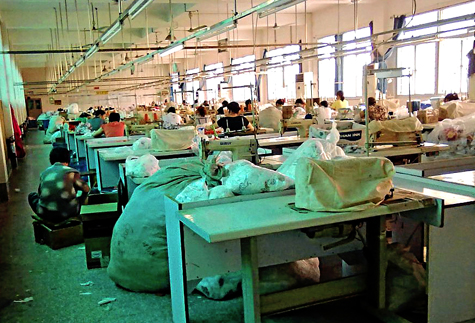
New allegations have been made that cuddly toy versions of the Olympic mascots are being produced in factories that abuse worker’s rights. The allegations have led to an internal investigation by LOCOG. The British toy company Golden Bear, who sell the mascot toys have been accused that  workers in their Chinese factory are alleged to work more than 11 hours a day, for 26p per hour. Golden Bear, along with the BTHA (British Toy and Hobby Association) have launched an inquiry and LOCOG claims to have contacted licensees to ‘reiterate the importance we place on the sustainable sourcing code they have each signed up to.’ A LOCOG spokesperson has said that they ‘place a high priority on environmental, social and ethical issues when securing goods and services and take these allegations extremely seriously’.

The LOCOG Sustainability Source Code (http://www.london2012.com/publications/locog-sustainable-sourcing-code.php) outlines LOCOG’s approach to the sustainable sourcing of materials, from timber for furniture and fitting to the product specific industry standards in merchandising. The principal audiences of the Code are internal buyers and specifiers and prospective suppliers and licensees i.e. both the LOCOG merchandising team and the toy’s manufacturers, Golden Bear. The code specifies that:

“Put simply, our approach to sourcing sustainable products can be based
on the following five key questions:
1. Where does it come from?
2. Who made it?
3. What is it made of?
4. What is it wrapped in?
5. What will happen to it after the Games? ”

It’s aim is that interested parties “can better understand our views on sustainability and how they are being implemented.” Prospective suppliers and licensees are advised to review the requirements of the Code and ensure that relevant areas of their business and supply chain are in compliance with its provisions. On occasions when we are sourcing services which involve labour, LOCOG uses the Ethical Trading Initiative (ETI) Base Code (http://www.ethicaltrade.org/resources/key-eti-resources/eti-base-code) as the required standard that suppliers should be achieving. in the case of Golden Bear’s factory, LOCOG’s processes for the tendering of contracts, both the Sustainability Source Code and the ETI Base code, seem to have been neglected. The question therefore is, how has this happened?

The LOCOG Code states that “following our due diligence process and award of a contract, we will monitor a supplier or licensee’s practices to ensure they are being carried out as agreed in the tender process”, and they utilize a spend priority categorization system to determine the likelihood of assessment and monitoring during the tender process. This means that the higher the priority according to the spend categorization the more likely it is that the prospective suppliers and licensees will be evaluated for their ethical sustainability. According to LOCOG sustainable sourcing code, the product specific industry standards for merchandising (the category into which the toy mascots fall) are rated as “moderate” priority and are SEDEX (Supplier Ethical Data Exchange – http://www.sedexglobal.com) mandated, though no guidelines or strategies exist for supporting sustainability. The upshot of this is that the potential for merchandise suppliers to be assessed during the tender process “will be determined by LOCOG on a case-by-case basis”, with “moderate” priority for sustainability support.

Perhaps in the case of Golden Bear the assessments were not deemed necessary. Perhaps the difference between “moderate” and “high” priority is purely a result of interest in the abuses of factory workers. Perhaps it is even the case that the LOCOG Sustainability Source Code is an elaborate exercise in demonstrating how important such ethical issues are in relation to the spending of money. It does seem more likely, though, that their prerogative is, as stipulated on page three of the Code, that “LOCOG will do business with suppliers and licensees who are best placed to deliver outstanding value for money”. In the case of the Golden Bear factory, this seems to be at odds with their commitment to sustainability as “one of several core elements which make up how we (LOCOG) define value for money.”


Click London Olympics for more blogs
See our Olympics project pages for more information and videos.
Or visit PlanA our general blog on urbanism, planning and architecture.

Spectacle homepage
Befriend Spectacle.Docs on Facebook
Follow SpectacleMedia on Twitter
Share and Enjoy:
  • Print
  • Digg
  • StumbleUpon
  • del.icio.us
  • Facebook
  • Yahoo! Buzz
  • Twitter
  • Google Bookmarks
  • Add to favorites
  • Current
  • email
  • Google Buzz
  • Identi.ca

No responses yet

Olympics – A PR opportunity for the shamefaced

Dec 08 2011 Published by under Olympics 2012

The London Olympics has already suffered severe setbacks from activists who are threatening to disrupt the smooth functionaing of the mega event. Lord Sebastian Coe, Chairman of the London Olympics Organising Committee has repeatedly turned down suggestions that he should get rid of some of the corporate sponsors. London which will be the first city to host the Olympic thrice is facing issues over sponsorship deals, transportation within the city, land grabbing and ceremonies expenditure.

The Olympics is an event of freedom, spirit, youth and energy; so why all these protests against an event of such big stature. The issue started when the organisers headed by Seb Coe agreed to massive sponsorship deals with corporates who have been responsible for heinous crimes in its history. BP, the most popular corporate culprit in the United States after its massive oil spills in the Gulf of Mexico has threatened more then 400 species and cost thousands of jobs. BP constantly delayed the cleaning of the oil spill and had to pay massive fines and compensations. American financial service giants VISA are engulfed in a controversy of their own. Any Olympic electronic financial transaction has to take place through a VISA debit or credit card. Many have raised their concern over the monopoly created by the organisers and have called for the boycott of the services offered by Visa.

The controversies that probably have managed to create a big dent on the mega event are the sponsorship deals with Dow Chemicals and ATOS. I have mentioned in my previous blog about the inhuman behavior of Union Carbide officials which is now owned by Dow Chemicals towards the people of Bhopal after a gas leak from a tank resulting in 3,000 lives in just one night. ATOS which is the private biggest health care service after the publicly owned NHS is under the limelight for its atrocious treatment of the disabled in the United Kingdom. Not many doubts were raised when athletes and activists have called for the Olympics to distance itself from ATOS or else they will try their best to boycott the Paralympic games. A similar threat has been given by some leading politicians and athletes from India to boycott the main event. Perhaps the biggest surprise to me was the deal with GE(General Electric). GE is one of the leading producers of nuclear energy in the world and not just in America, as it has helped set up nuclear capabilities in many other countries.

It is a farce that corporates who have performed with dubious moral ethics have been allowed to sponsor an event that symbolises unity. Spread the word against corporate greed.

Click London Olympics for more blogs

See our Olympics project pages for more information and videos.

Spectacle homepage
Befriend Spectacle.Docs on Facebook
Follow SpectacleMedia on Twitter

Share and Enjoy:
  • Print
  • Digg
  • StumbleUpon
  • del.icio.us
  • Facebook
  • Yahoo! Buzz
  • Twitter
  • Google Bookmarks
  • Add to favorites
  • Current
  • email
  • Google Buzz
  • Identi.ca

No responses yet

Olympic organisers go for gold

Aug 24 2010 Published by under Olympics 2012

A quick glance at the NDPB top earners’ list reveals that 3 out of the top 9 earners’ are in fact on the ODA (Olympic Delivery Authority)’s ‘senior team’. David Higgins, chief executive of the ODA, is officially the highest earning civil servant in the land with a whopper of an annual salary of between £390,000 and £394,999. John Armitt, chairman of the ODA board also made it into the top earners’ list and these 4 along with 5 other ODA senior executives each earn more than the UK Prime Minister, himself on a comparatively measly £142,500.

With such a big pile of Olympic gold split up between the senior executives, one wonders why those 78,000 unpaid Game Makers can’t be given a slice of the pie. Considering these volunteers will not be given the pleasure of watching the games themselves during their ten days of unpaid labour and further three unpaid days of training, one would think it’d be at least courteous to offer them more than a few free McDonalds lunches and free travel on working days.

It would seem that the winning team have already been decided, they’re up in One Churchill Place in Canary Wharf it would seem…

Click London Olympics for more blogs
See our Olympics project pages for more information and videos.
Or visit PlanA our general blog on urbanism, planning and architecture.

Share and Enjoy:
  • Print
  • Digg
  • StumbleUpon
  • del.icio.us
  • Facebook
  • Yahoo! Buzz
  • Twitter
  • Google Bookmarks
  • Add to favorites
  • Current
  • email
  • Google Buzz
  • Identi.ca

No responses yet

A local business man speaks out about the Olympics

Nov 12 2009 Published by under Active Archive, Olympics 2012

Lance Forman is managing director of H Forman & Son, a salmon smoking factory, that has been based in East London for over 100 years. In these interviews he speaks about the obstacles his business has had to overcome in connection with the Olympics.

OlympicForman

After having build a brand new factory with a grand by the LDA, H Forman & Son were faced with a compulsory puchase order by LDA and the task to relocate, along with 250 other businesses.

Part 1 deals with the history of the factory and the bad luck the company has faced during the past 10 years.
Part 2 is an account of the negotiations and dealings with the LDA
Part 3 takes a different view on the Olympic Legacy
Part 4 talks about the public presentation of the Olympics
Part 5 is the story of the search for a suitable site for a new factory
Part 6 tells about the last obstacles that had to be overcome when building the new factory

Share and Enjoy:
  • Print
  • Digg
  • StumbleUpon
  • del.icio.us
  • Facebook
  • Yahoo! Buzz
  • Twitter
  • Google Bookmarks
  • Add to favorites
  • Current
  • email
  • Google Buzz
  • Identi.ca

No responses yet

World Cup effect on South africa

Sep 23 2009 Published by under Olympics 2012

Mnikelo talking

Mnikelo talking

In may 2004, South Africa became the first African nation to be nominated to host a football World Cup. Following that announcement, South African’s were overwhelmed by the prospect of much needed development and new business opportunities.

Since then, a lot (mainly the poorest) have been evicted or resettled  as the government try to show a “clean” image of South Africa to the world.

Spectacle has recently uploaded and interview with Mnikelo and Zodwa from Abahlali baseMjondolo, the South African shackdwellers’ movement, talking about the negative effects of the 2010 World Cup on South Africans. This can be viewed on the Spectacle archive page (World Cup, South Africa) and was filmed in connection with the London Olympics 2012 and the recurring effect of mega sporting event.

Mnikelo’s interview gives an insight into the World Cup backstage and its effect on the host nation.

Share and Enjoy:
  • Print
  • Digg
  • StumbleUpon
  • del.icio.us
  • Facebook
  • Yahoo! Buzz
  • Twitter
  • Google Bookmarks
  • Add to favorites
  • Current
  • email
  • Google Buzz
  • Identi.ca

No responses yet