Industrial heritage “As important as our country homes and castles”

Oct 21 2011 Published by under Battersea Power Station

A new survey from English Heritage has found that listed industrial buildings are at the highest risk of severe neglect. Around 3% of standard grade I and II* listed buildings in England are considered to be at risk, while a staggering 11% of industrial grade I and II* listed buildings are in the same category.

Grade I and II* industrial listed buildings in England cover a variety of structures from across the industrial spectrum including Battersea Power Station.

According the English Heritage the problem is not a lack of appreciation from the public. A poll of public attitudes carried out on their behalf shows that 86% of the public agree that it is important we value and appreciate industrial heritage and 80% think it is just as important as our castles and country houses.

Despite English Heritage’s obvious concerns about the future of listed industrial heritage sites, it seems that they have some problems categorising the status of some of these sites.

Their 2011 Heritage At Risk Register lists both Battersea Power Station and the Victorian Battersea Pumping Station as “Priority D”. This means “Slow decay; solution agreed but not yet implemented”. Which is ambiguously incorrect on both fronts.

Battersea Pumping station:

The report does correctly state that this historic Victorian Pumping station is going to demolished, despite widespread and authoritative opposition, after a planning application was approved by Wandsworth Council in November 2010. So what English Heritage really mean is, it’s going to be knocked down but it hasn’t been done yet. The pump station is crucial, the only reason to demolish it  is it allows the power station owners REO,  to maximise profits. Apparently completely ignoring Malcolm Tucker of the Greater London Industrial Archaeology Society  who previously made it clear “that it should be possible to incorporate the conserved building within the scheme.”

Battersea Power Station:

Again the report offers clarity by stating “fresh planning and listed building applications approved 2010 subject to legal agreement for restoration, extension and conversion of Power Station to provide retail, residential flats, business, cultural, hotel and conference facilities.”

There are two problems here: 1, “D” has been the status of the power station for decades now and little has changed. 2, the fact that legal agreement is required means that a solution has not been agreed.

Priority D is therefore the developers ideal status. Using the “big bang theory of redevelopment” implementation of the “solution” can be almost permanently postponed. Rather than phased conservation and restoration the heavily indebted REO insists their preposterous scheme to “save” the power station depends of a new tube line being dug, which of course will never happen.  They claim that their “solution” to restoration depends on the creation of a whole new urban area- a scheme that looked unlikely even in the height of the property boom.

Meanwhile the building falls into decay and eventually will require demolishing for safety reason giving the developer a clear conscience and nice clear piece of land to build on. Never mind that the nation loses one of its most iconic industrial buildings that are ‘as important as our castles and country homes”.

Of course the developers could “moth ball” both buildings until such time that a genuinely appropriate and viable solution comes along, but there is no need to speculate on why they won’t do that.

Click Battersea Power Station for more blogs
See our Battersea Power Station project pages for more information and videos.
Or visit PlanA our general blog on urbanism, planning and architecture.

Spectacle homepage
Befriend Spectacle.Docs on Facebook
Follow SpectacleMedia on Twitter

Share and Enjoy:
  • Print
  • Digg
  • StumbleUpon
  • del.icio.us
  • Facebook
  • Yahoo! Buzz
  • Twitter
  • Google Bookmarks
  • Add to favorites
  • Current
  • email
  • Google Buzz
  • Identi.ca

One response so far

Do the business, secretary!

Oct 12 2011 Published by under planA

A new video has recently surfaced on youtube which gives a great summary of the problems surrounding the redevelopment of the Hampton Court site.
x
The video makes the point that urbanisation of the south bank of the river Thames will not  only mean destruction of a historic view of Hampton Court Palace, but will also make some people and companies very rich.
x
Hampton Court Palace lies in business secretary Vince Cable’s constituency of Twickenham. Mr Cable opposed the plans whilst in opposition, but since coming to power he seems to have lost his voice on the subject.

The video makes one point that should give us all cause for concern. The application itself is opposed by many factions, including Hampton Court. If Hampton Court is unable to oppose an inappropriate planning application then there is no hope for us commoners.


Here it is:


Click PlanA for more blogs on urbanism, planning and architecture.
Or visit our project pages on London Olympics 2012 and Eco Towns and Villages for more information and videos on urbanism, planning and architecture.

Spectacle homepage
Befriend Spectacle.Docs on Facebook
Follow SpectacleMedia on Twitter
Share and Enjoy:
  • Print
  • Digg
  • StumbleUpon
  • del.icio.us
  • Facebook
  • Yahoo! Buzz
  • Twitter
  • Google Bookmarks
  • Add to favorites
  • Current
  • email
  • Google Buzz
  • Identi.ca

No responses yet

Pink Floyd fans witness redevelopment failure of the Battersea Power Station 35 years later

Sep 26 2011 Published by under Battersea Power Station

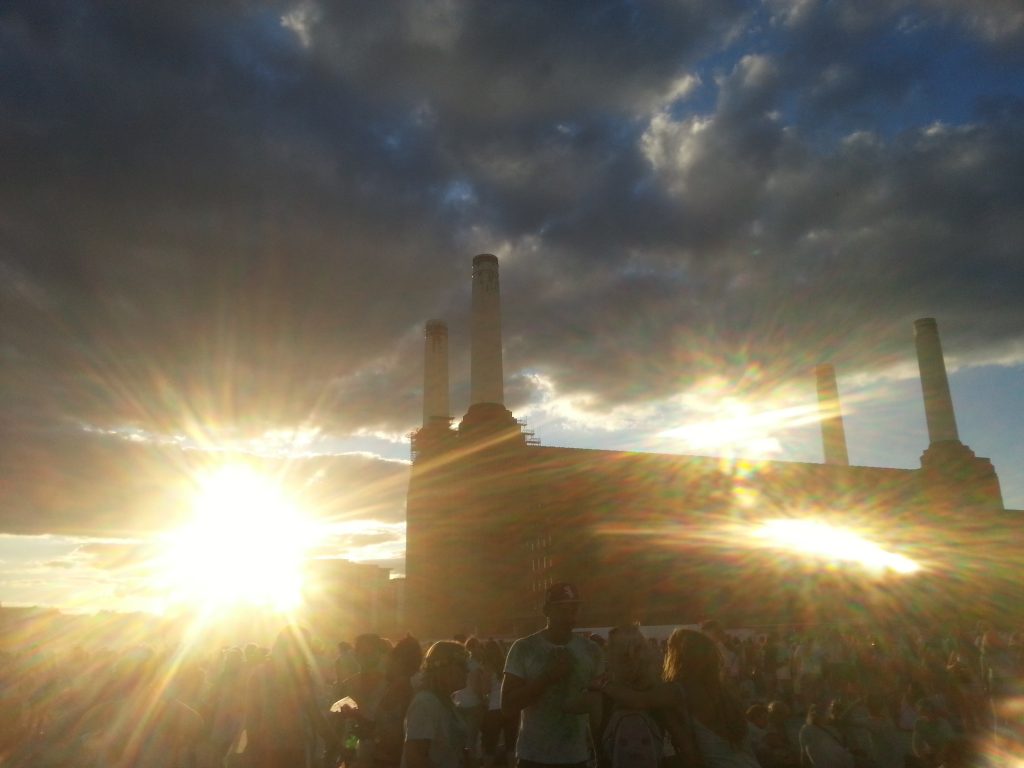
A pig is flying over the Battersea Power Station, London again, 35 years after it flew there for the first time in 1977. On both occasions Pink Floyd released the albums with the floating pig shot on the covers, and even though the musicians did not attend the events in person, they once again brought desirable publicity to the derelict station.

The two covers, Animals in the past and Why Pink Floyd…? today,  can be easily confused, as this landmark site looks exactly the same as 35 years ago. This is in spite of the owners constant promises to renovate the station and “create an entirely new district for London“. The current development proposal aims to create the first zero carbon office space in Central London, “a stunning event space”, the river walk section, a green energy plant and a conference centre etc.

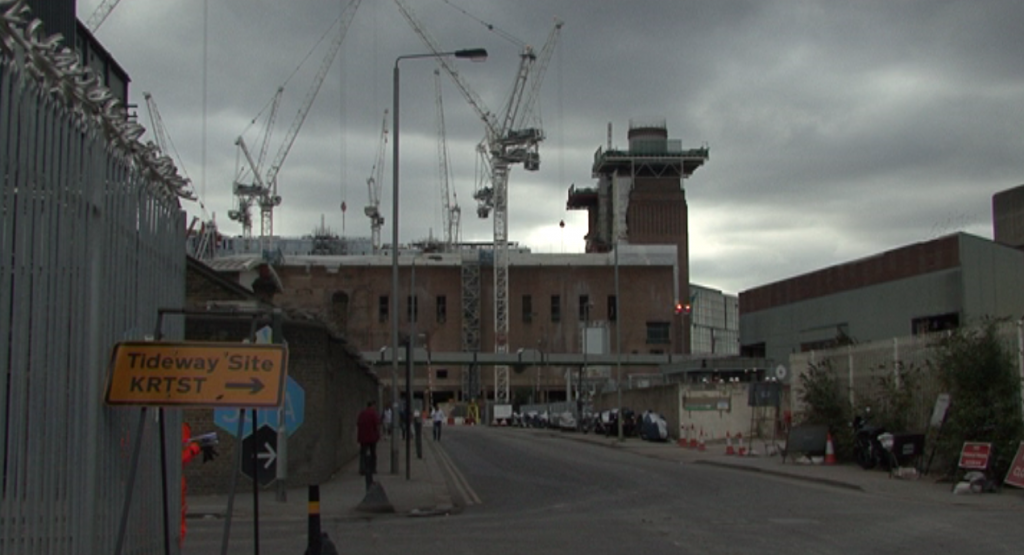
However, so far the inflatable pig is probably the only “cultural” mark at the station site, despite the cultural rejuvenation plans proudly announced on the Battersea Power Station Website . The power station has been unused since its closure in 1982, and is gradually falling to the ruin. In consequence, English Heritage described the conditions at the place as “very bad”, and included it on the Buildings at Risk Register.

The current owners,  Treasury Holdings, struggle to make the ends meet due to the Irish banking crisis. This might force the company to sell the station to another private developer willing to face those financial challenges, which the previous three owners failed to cope with. Further information can be found on the Spectacle’s Blog.

Perhaps real pigs will start flying sooner than the actual redevelopment will finally begin.

Click Battersea Power Station for more blogs
See our Battersea Power Station project pages for more information and videos.
Or visit PlanA our general blog on urbanism, planning and architecture.

Spectacle homepage
Befriend Spectacle.Docs on Facebook
Follow SpectacleMedia on Twitter
Share and Enjoy:
  • Print
  • Digg
  • StumbleUpon
  • del.icio.us
  • Facebook
  • Yahoo! Buzz
  • Twitter
  • Google Bookmarks
  • Add to favorites
  • Current
  • email
  • Google Buzz
  • Identi.ca

No responses yet

Battersea Power Station: an open letter to the Science Museum

Mar 31 2011 Published by under Battersea Power Station

thinks..one day all this will be allowed to rot...

Keith Garner is a Battersea-based architect and member of the Battersea Power Station Community Group who has recently addressed an open letter to the new head of the Science Museum, Ian Blatchford, proposing a collaborative arrangement between private developers and public institutions to secure the future of the Battersea Power Station.

It has been suggested several times that parts of the Station, especially the famous ‘A’ Station Turbine Hall and Control Room, would work well as a museum of industry or science, and this proposal was raised again at a lecture on the future of Battersea Power Station delivered by architecture historian Gavin Stamp recently. After attending the lecture, Keith drafted a letter to Ian Blatchford proposing the idea of a collaborative effort between the Science Museum and developers.

Battersea Power Station’s owners, Treasury Holdings, are currently in financial difficulty because of the Irish banking crisis and it looks likely that they will soon be forced to sell to another private developer, and there’s little to suggest that a new private owner would fare any better at Battersea Power Station than their three predecessors.

A joint venture would not only guarantee public access to the BPS, but also give private developers a greater chance of success in their plans for the site.

Click Battersea Power Station for more blogs
See our Battersea Power Station project pages for more information and videos.
Or visit PlanA our general blog on urbanism, planning and architecture.

Spectacle homepage
Befriend Spectacle.Docs on Facebook
Follow SpectacleMedia on Twitter
Share and Enjoy:
  • Print
  • Digg
  • StumbleUpon
  • del.icio.us
  • Facebook
  • Yahoo! Buzz
  • Twitter
  • Google Bookmarks
  • Add to favorites
  • Current
  • email
  • Google Buzz
  • Identi.ca

No responses yet

Battersea Power Station- a tragi-comedy of errors

Nov 12 2010 Published by under Battersea Power Station

here today...

Battersea Power Station- a tragi-comedy of errors.

by our theatre critic BabyLonDon

Last night’s Wandsworth Borough Council Planning Committee meeting to approve the demolition of the Victorian Battersea Pumping Station and the demolition (and supposed replacement) of the iconic power station chimneys was the best show in town- Dickens in modern dress that occasionally lapsed into panto. The farce played to a packed house – with the corridors full of (vested?) interested parties straining to hear the proceedings over the PA.

The rather predictable plot- a variation on the turkeys voting for Christmas story -had a committee clearly determined to vote in favour spending three hours going through the massive planning application with just one dissenting voice of reason, played by a rather hammy councillor Tony Belton, pointing out the blindingly obvious flaws and unfeasibility of the scheme.

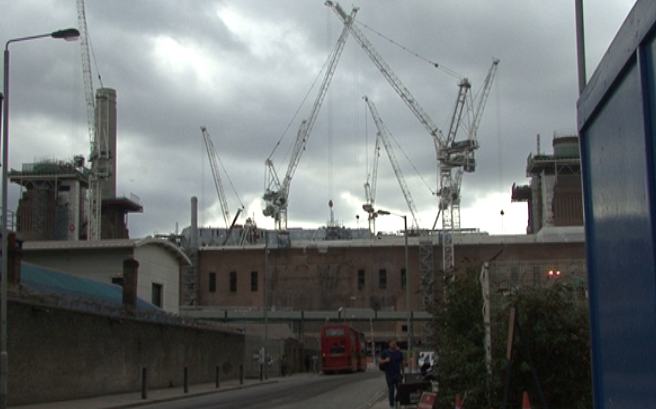
The real drama and humour lay in the fact that the committee seemed oblivious to the subplot- that the developers, REO (Treasury Holdings UK), are massively in “toxic” debt and in effect owned by the Irish tax payers via  NAMA and will do nothing but continue to demolish what little is left on the site and then “flip it”- selling it on as an empty brown field site for river front luxury development.

REO were unlucky that when the music of the property boom stopped they were left without a chair, but lucky enough to have their biggest non-Irish asset located in Wandsworth, infamous for having allowed the power station to fall into its current state of near dilapidation and for waving through truly hideous and desolate riverside developments.

There was something distasteful in the pathos of the affable officer’s naive presentation of the nonsensical scheme as from the public gallery hard nosed and cash hungry developers salivated at the easy meal they were shortly to enjoy.

There were comic moments as the “power dressed” committee members seemed to be made up of people who were in thrall to the promised dream of capitalism but had no clue about business. They dismissed the very real credibility gaps in the developers “vision”, enthusiastically hanging the whole wobbly edifice on the “promise” that these mega debtors (or at least Irish toxic debt vehicle NAMA) would stump up over 200 million pounds for the Northern Line Extension, or as it is known locally the “Ghost train to nowhere”. Even if this phantom train ride were real it would not happen for years even if it all went to plan… it was an evening of “even ifs”.

One comedic highlight was the officer’s report on the stringent “conditions” the council had negotiated with the Developers.

REO could take down the chimneys but must replace within 7 years.

REO could remove the embarrassing sight of the wharf cranes they are letting rot and could “restore” them inside the hulk of the rotting power station.

REO could first develop a slither of land on the north west river front. Happily the piece of land with most instant resale value, being the furthest from the smelly and polluting waste transfer facility on the north east water edge of the site and the cluster of huge gas holders on the south west edge, deemed by the HSE to be enough of a potential danger to society they recommended the scheme was rejected. This danger of an inferno seemed not to trouble the committee who dismissed the HSE’s concerns. One councillor mocked it as health and safety gone mad as residents of the later phases of the development nearer the potential blast would have chosen to buy their luxury flats aware of the risk.

They also swallowed, uncritically, the completely spurious argument for knocking down the grade II listed Victorian pumping station on the grounds it was a “community benefit” in order to “save” the power station apparently achieved by destroying its architectural value by knocking windows all along its sides and turning it into a shopping mall with luxury flats.

All of the responsibilities and commitments of REO were locked into phases of the development projected way into the future. As REO have no real intention, or means, to “deliver” these planning pipe dreams they were in effect getting off Scot free. The only thing the planning committee’s decisions would guarantee were the demolitions.

The press has been full of the glossy artists impressions of this bright new future but actually it is a dark day for most Battersea residents as this scheme will deliver nothing but another decade of planning blight. A bleak future without two of the regions most precious and best loved buildings.

The optimists had to accept that even if the Power Station were to survive this scheme it could not actually be seen from anywhere in the borough once surrounded by the 15+ storey buildings REO planned.

Given the power station is Wandsworth Borough council’s logo it was indeed a turkey landslide vote for every day being christmas.

BabyLonDon’s Final Verdict: Funny but sad. Not an “An absolute triumph”

Click Battersea Power Station for more blogs

See our Battersea Power Station project pages for more information and videos.
Or visit PlanA our general blog on urbanism, planning and architecture.

Spectacle homepage
Befriend Spectacle.Docs on Facebook
Follow SpectacleMedia on Twitter
Share and Enjoy:
  • Print
  • Digg
  • StumbleUpon
  • del.icio.us
  • Facebook
  • Yahoo! Buzz
  • Twitter
  • Google Bookmarks
  • Add to favorites
  • Current
  • email
  • Google Buzz
  • Identi.ca

No responses yet

Battersea Power Station demolition by stealth gets council go ahead

Nov 12 2010 Published by under Battersea Power Station

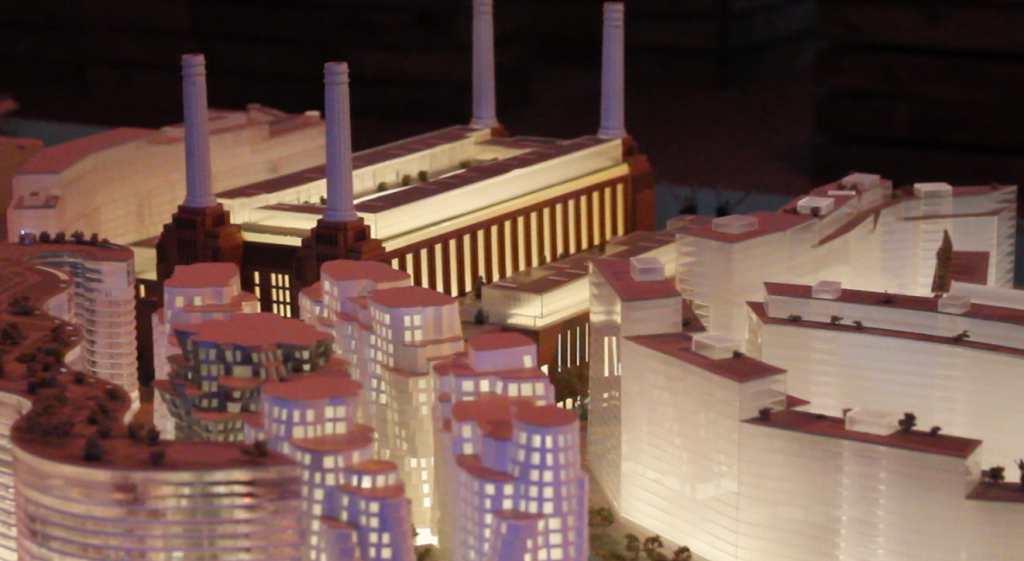
Tonight, with only one vote against, the London Borough of Wandsworth’s Planning Committee gave the green light for the demolition by stealth of Battersea Power Station by approving the chimneys are removed and (maybe?) replaced and the total destruction of the Victorian Pumping Station as predicted. Condemning north Battersea to another 15 years of urban blight.  But take heart there are still many rivers to cross (for the developers) and many opportunities along the way for us to propose more imaginative uses and to prove that urban planning by speculation is not viable or in the public interest.

For a full report read the review by Spectacle’s theatre critic BabyLonDon

“An absolute triumph”

Coming soon… details of our photographic competition: Soon to be Lost Views of Battersea Power Station

Click Battersea Power Station for more blogs
See our Battersea Power Station project pages for more information and videos.
Or visit PlanA our general blog on urbanism, planning and architecture.

Spectacle homepage
Befriend Spectacle.Docs on Facebook
Follow SpectacleMedia on Twitter
Share and Enjoy:
  • Print
  • Digg
  • StumbleUpon
  • del.icio.us
  • Facebook
  • Yahoo! Buzz
  • Twitter
  • Google Bookmarks
  • Add to favorites
  • Current
  • email
  • Google Buzz
  • Identi.ca

No responses yet

Evicted for Sport

Jul 16 2010 Published by under Olympics 2012

:courtesy: Ravi Chaudhary/Governance Now.

This year, the commonwealth games are held in Delhi. Minister of Delhi 2010 Sheila Dikshit’s  concept of a “World Class” image has convinced local officials to  demolish any slums local to the commonwealth venues.

On the 7th of July 2010, during work hours, a government funded demolition team took bulldozers to the Yamuna Khada school (funded by donations) in order for it to be ruthlessly demolished. Those who attended and worked at the school were given three hours to vacate the property with no alternative. Police were present along with the construction teams and were seen destroying whatever could be demolished by hand in order to put fear into local residents. Many were removed with physical force.

After the destruction of the school, children as young as five years old were seen with teachers attempting to salvage items from the rubble of the school in order to save whatever they could for their community.  The children will have to relocate to the nearest alternative school three miles away in order to have an education. The school as part of the community was by no means a luxury but a necessity. With no immediate community to move to it is unknown when they are next able to continue their education and their lives.

Children from slums (including the Yamuna slums) have come together to produce a book of poems entitled “We Built This City” in order to save at least the memory of the community that they and their families have spent the last 25 years building. This emotional and reflective collection is the only weapon these children have against the bulldozers and police sent in by the government. With India hoping to host the 2016 Olympics it’s a wonder how far this abuse of the poor is going to go.

To find out more about what is happening concerning the destruction of the slum communities and to help support those who have suffered from the effects of the redevelopment of the Yamuna river, please visit Sarai and Governance now. If you would like to see how we have looked at this issue, please see our London / Delhi Project.

With similar effects seen in Beijing (Olympics 2008) and the UK (arguably with less government approved violence), it is questionable whether the development of these cities to create a “world class image” is necessary or progressive. The compaction of poor communities increases the class divide as well as reducing the opportunity for the poor to improve their standard of living.

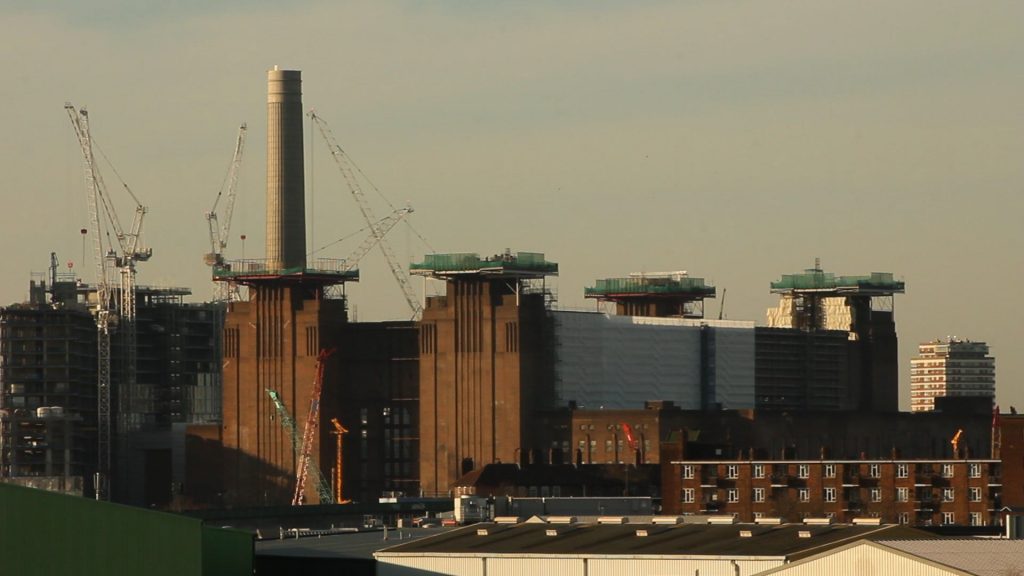
Interestingly the official explanation for why the school needed to be demolished was “security”, the same reason given for demolishing the 100 year old Manor Gardens Allotments in London. These mega-events last only a few weeks- demolition is forever. There is only one difference between the events in London and Delhi. Eviction with a smile.

Remember- Its not losing that matters, its the taking part.

Click London Olympics for more blogs
See our Olympics project pages for more information and videos.
Or visit PlanA our general blog on urbanism, planning and architecture.

Spectacle homepage
Befriend Spectacle.Docs on Facebook
Follow SpectacleMedia on Twitter
Share and Enjoy:
  • Print
  • Digg
  • StumbleUpon
  • del.icio.us
  • Facebook
  • Yahoo! Buzz
  • Twitter
  • Google Bookmarks
  • Add to favorites
  • Current
  • email
  • Google Buzz
  • Identi.ca

No responses yet

Save Battersea Pumping Station from demolition

May 21 2010 Published by under Battersea Power Station

Battersea Pumping Station

Developers REO want to demolish Battersea Pumping Station

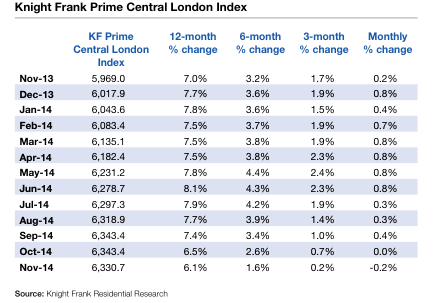
Last week’s blog entry on Battersea Pumping Station focused on the frailty of the argument behind demolishing the building by current developers REO / Treasury Holdings. The pump house is a listed building at Grade II and pre-dates the power station by several decades as it was built in 1850. It has suffered from the same neglect that has befallen the power station, and like the sleeping giant that dwarfs it, it has been proclaimed as unrestorable by the developers and therefore fair game to be knocked down to make way for gated communities and a retail hub.

Yet much is being ignored here. The new Planning Policy Statement 5 declares that the council must take into account not only the possibility of sustaining and restoring a building of historical significance, but also weigh up the loss of heritage that would disappear along with the building against the desirability of any new development and the effects of both actions on the local community.

Kew Bridge Engines Trust, 20th Century Society, Battersea Society, SAVE, Greater London Industrial Archaeology Society, and also The Victorian Society (whose have posted a formal written objection and recorded an interview with Spectacle on their attitude towards the developers’ plans), are amongst many significant organisations to have questioned the planning application. And with good reason.

The developers are playing the practical usage card, and are shrewdly associating the building’s dereliction with inaction and obsolescence. However, Spectacle followed a team of architects who declared the pumping station structurally sound, and therefore transformation must subjugate destruction according to PPS5, but in what capacity?

Papplewick Pumping Station, above, is an illustration of a successful restoration on multiple levels. Built a few decades later, the water pumps are back in full working order and as a museum the station is an important focus of historical and engineering study. English Heritage, who have for the past few years failed to back any substantial arguments for preservation, have conversely put money into the ongoing restoration of Cross Ness Pumping Station, which includes plans for use in an educational context, and will be finished in 2011.

For Battersea, the local industrial heritage could play a huge role in the redevelopment of the power station site. Other suggestions include an exhibition space for artists and musicians, as well as a provision for housing archive materials indispensable for environmental, archaelogical and architectural study.

Beyond the functional potential for the site, it would reverse years of association with apathy and inertia, and could instead by synonymous with ingenuity, innovation and regeneration, perhaps even ultimately rousing support for a more public discussion on plans for the site’s regeneration.

A decision on the current application will be made by Wandsworth Council in July. It is not too late to register your comment or objection to its demolition.

Click Battersea Power Station for more blogs
Or visit PlanA our general blog on urbanism, planning and architecture.
See our Battersea Power Station project pages for more information and videos.

Spectacle homepage
Befriend Spectacle.Docs on Facebook
Follow SpectacleMedia on Twitter
Share and Enjoy:
  • Print
  • Digg
  • StumbleUpon
  • del.icio.us
  • Facebook
  • Yahoo! Buzz
  • Twitter
  • Google Bookmarks
  • Add to favorites
  • Current
  • email
  • Google Buzz
  • Identi.ca

No responses yet

Scant evidence for destruction of Battersea Pumping Station

May 06 2010 Published by under Battersea Power Station

The future of Battersea Pumping Station, located next to the Battersea Power Station, is in serious doubt. If the current planning application to redevelop Battersea Power Station and the surrounding land by REO / Treasury Holdings is accepted without alteration by Wandsworth Council in July, the Grade II listed building would be demolished under assertions by the developers that the scheme would not be economically viable with its continued existence.

However, evidence to support this claim is less than accurate. Neither in the private nor public domain have the developers or Wandsworth Council revealed the percentage split of affordable and luxury housing. Without knowing what percentage of the planned housing developments will be “luxury” or affordable apartments it is not possible for REO, let alone English Heritage, to know how much profit the developers will make, therefore arguments over the economic viability of the scheme are spurious. Assuming the developer calculated the minimum amount of “affordable” flats would be needed the issue is not the economic viability of the scheme but the size of REO/Treasury Holdings profit margin.

REO argue that the Pumping Station should be demolished for the “Community benefit” but what they mean is their profit. It is becoming depressingly common for developers to present their economic interests as a community benefit. In this case what is actually meant is that if the developer does not get its way and make a substantial profit then the scheme will not go ahead and the community will suffer decades more planning blight.

Despite formally submitting their application in November 2009 in which they declared that flattening the pumping station would be critical, in February the only definitive number of houses of the 3856 dwellings of the master plan given any ‘status’ whatsoever are the 245 build-to-let houses – classified as non-affordable. As recent as March this year, in a Q & A session with the Planning Director Jeremy Castle, the percentage of affordable housing against non-affordable had still yet to be decided.

English Heritage, an organisation whose official remit is to promote and protect Britain’s historical environment, have effectively given their blessing to REO by deferring any decision-making responsibility to the Local Planning Authority.

In a letter to the Local Planning Authority, Nick Collins stated that although the proposed plans “risk causing harm to the setting”, the decision ultimately rests on assessing whether or not the ‘substantial community benefit’ (community benefit in this case being  private gain) outweighs the loss of the building and whether or not the building could be bought up by another party and reused (you can see the new legislation PPS5 here).

Under this new legislation the council must establish no other organisations are interested in buying the building or that no alternative community use can be found. Battersea Power Station Community Group has registered its interest and is supported by  a number of  local and special interest groups.

The Victorian Society is one of a number of expert groups who are against demolishing  the Pumping Station, yet they have been ignored (see the interview with Alex Baldwin from The Victorian Society here).

Jeremy Castle plans to reveal the official percentage of affordable housing on June 15th – less than a month before Wandsworth Council make their final decision on the application. Aside from the absurdity of demanding a 150 year-old building be torn down because ‘it might be handy’, the relinquishing of accountability by organisations like English Heritage  demonstrates an alarming and depressing deference to private business when they are funded to enforce and support preservation.

The exhausting planning process and massive application documentation helps developers like REO / Treasury Holdings to wear down any resistance and bury the fact that they intend to destroy historically and culturally significant sites without open discussion. As English Heritage have in recent years funded the restoration of Cross Ness Pumping Station, their dereliction of duty and unfounded support for the vandalism of Battersea Pumping Station is curious.

Click Battersea Power Station for more blogs
Or visit PlanA our general blog on urbanism, planning and architecture.
See our Battersea Power Station project pages for more information and videos.

Spectacle homepage
Befriend Spectacle.Docs on Facebook
Follow SpectacleMedia on Twitter
Share and Enjoy:
  • Print
  • Digg
  • StumbleUpon
  • del.icio.us
  • Facebook
  • Yahoo! Buzz
  • Twitter
  • Google Bookmarks
  • Add to favorites
  • Current
  • email
  • Google Buzz
  • Identi.ca

One response so far

‘Play Boy’ Owner Spending Spree Scandal

Mar 19 2010 Published by under Battersea Power Station

An article in the Evening Standard today reveals the huge spending sprees of one of the ‘play boy’ owners of the Power Station, while the building itself is lacking funding to keep it standing.  Article features interview with Battersea Power Station Community Group member Brian Barnes.

Share and Enjoy:
  • Print
  • Digg
  • StumbleUpon
  • del.icio.us
  • Facebook
  • Yahoo! Buzz
  • Twitter
  • Google Bookmarks
  • Add to favorites
  • Current
  • email
  • Google Buzz
  • Identi.ca

No responses yet

Older posts »